
Dog & Cat Control

Introduction
The Southern Mallee District Council administers the Dog & Cat Management Act 1995 as amended.
What to Do If a Dog Attacks
If you or your pet are involved in a dog attack, your immediate priority should be seeking medical or veterinary assistance. Once safe, it is essential to report the incident to the council as soon as possible.
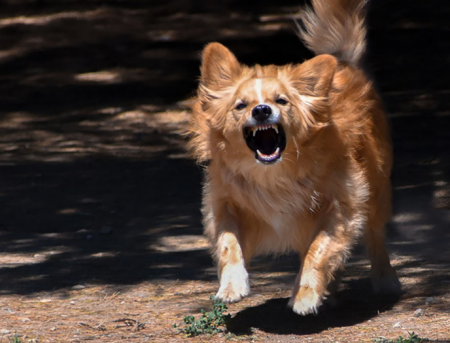 You can contact Council during business hours. For after-hours emergencies, please call 08 8577 8002 and you will be given a number to call to speak with an on-duty officer. Additionally, South Australia Police are authorised under the Dog and Cat Management Act 1995 to respond to dog attacks.
Additionally, South Australia Police (SAPOL) are authorised under the Dog and Cat Management Act 1995 to respond to dog attacks and may be contacted for assistance.
Reporting a Dog Attack
Timely reporting is crucial, especially if the offending dog is loose and poses a continued risk. When contacting the council, try to provide the following details to assist the investigation:
- Date, time, and location of the attack.
- Description of the dog: registration disc, name tag, breed, colour, sex, markings, collar size and colour.
- Description of the owner: name, address, phone number, gender, age, hair colour, and clothing.
- Vehicle details (if applicable): registration number, make, model, and colour.
- Details of injuries: provide descriptions and photographs of any injuries sustained by yourself, your pet, or others.
Keep copies of any medical or veterinary bills, along with any medical certificates, as evidence.
What Happens After Reporting
Once an attack is reported, authorised council officers will:
- Request you to complete an Incident Report.
- Document the injuries through photographs.
- Contact the dog’s owner for their account of the incident.
- Collect witness statements and additional evidence.
- Assess all evidence to determine the appropriate action.
- Inform all parties involved of the outcome.
Depending on the severity of the attack, the council may:
- Issue a warning.
- Impose an on-the-spot fine (e.g., $315 or $750 for dangerous dogs).
- Pursue legal action for serious cases.
- Apply control orders (e.g., Nuisance, Dangerous Dog, Menacing Dog, or Destruction Orders).
The maximum penalty for a dog attack is $2,500. However, penalties for dangerous dogs or prescribed breeds can range up to $10,000 for repeat offences.
Responsibilities of Dog Owners
As a dog owner or caregiver, you are legally responsible for your dog's actions. It is an offence for a dog to attack, harass, or chase:
- A person.
- Another animal.
- A bird owned by a person.
For detailed information, refer to the Dog and Cat Management Act 1995.
Preventing Dog Bites
Dogs may bite due to fear, pain, or anxiety. Prevent bites and promote safer interactions by:
- Socialising your dog early to help it feel comfortable around other people and animals.
- Avoiding situations that may cause nervousness or stress.
- Enrolling in obedience classes to improve communication and understand your dog's behaviour.
- Desexing your dog (mandatory for dogs born after 1 July 2018 unless exempt). Research shows desexed dogs are generally less aggressive.
- Seeking advice from your vet if your dog shows signs of aggression.
By taking these proactive measures, you can help ensure the safety of your family, community, and pets.
Controlling Your Dog
As a dog owner, you are responsible for ensuring your dog is under control at all times.
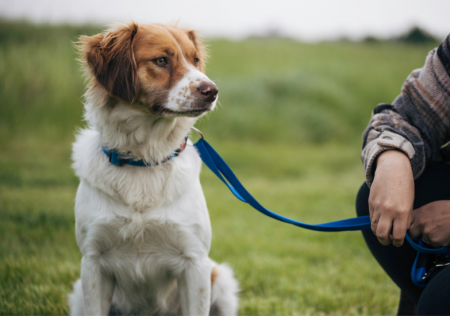 Under the Dog and Cat Management Act 1995, you must prevent your dog from:
- Wandering into public or private property without permission.
- Attacking, harassing, or chasing people or animals.
- Attacking anyone lawfully entering premises.
- Entering schools, kindergartens, or childcare centres without authorization.
- Entering shops or areas where food and beverages are sold or prepared, except for locations like pet stores, veterinary clinics, or grooming salons.
- Chasing vehicles.
Failing to control your dog may result in penalties. These rules do not apply to guide dogs or assistance dogs.
Dogs in Front Yards
While there are no specific laws about where your dog should be kept on your property, it is recommended to confine your dog to the backyard.
According to sections 43 and 44 of the Dog and Cat Management Act 1995, owners can be held liable if their dog:
- Attacks, harasses, chases, or endangers the safety of a person.
- Is classified as Wandering at Large.
If a dog kept in the front yard is involved in an incident, owners may face legal consequences. This includes situations where the dog is:
- Allowed unsupervised access to the front of the property.
- Kept in an unsecured area that facilitates an escape.
Potential Consequences
If an incident occurs, the Council may take the following actions:
- Issue a $210 expiation fee for Wandering at Large or a $315 fee for an offense involving attacking, harassing, or chasing.
- Enforce control orders requiring the dog to be kept indoors or ensuring the property is securely fenced.
- Pursue court proceedings, which may result in penalties of up to $2,500 if convicted.
Additionally, victims of dog-related incidents can file civil lawsuits against the owner for damages.
Lost Dogs
 If you have lost your dog, it is important to act immediately by logging onto Dogs and Cats Online and marking it as lost. If you do not have access to the internet phone Council on telephone (08) 8577 8002 and we can assist. When reporting a lost dog include its name, sex, breed, colour, age and size and any other identifiable features. Also include if it is wearing a collar and ID or is microchipped. It is a good idea to have a colour picture of your dog or cat uploaded on the Dogs & Cats Online database.
Found Dogs
If you find a dog, phone the Council immediately on (08) 8577 8002. Some animals may require daily medication, or may bite out of fear. Some animals may even carry communicable diseases that could put your family and your pets at risk. If the dog is wearing a tag you will be able to enter the tag number onto Dogs and Cats Online and you will be provided with the Council of which it is registered to contact or if the owner has already marked the dog as lost they can also choose to make their contact details available to the public.
Impounded Dogs
All dogs impounded by Council without identification are placed on this page, Council’s Facebook page and posters are displayed at each of the Council Offices. If you have lost your dog, it is recommended that you check Council’s Facebook site (click here to visit site) and also contact Council’s Animal Management Officers on (08) 8577 8002 as soon as possible.
Dogs impounded by Council are released on payment of all fees and charges relating to the impounding of the dog (pursuant to Section 62 of the Dog & Cat Management Act, 1995).
Should you require further information please contact one of our helpful Customer Service Team on (08) 8577 8002.
Council currently has the following dogs impounded:
Nil.
Dog Registrations
From 1 July 2018 Dogs and Cats Online replaced 68 individual Council dog registers and serves as a single online database that is accessible 24/7 for registration, microchipping and breeder information.
Dog registration is mandatory in South Australia. If you obtain a dog older than three months of age, then you have 14 days in which to register the dog. It doesn't matter at what time of year your first registration is done.
The registered owner of a dog must be over 16 years of age.
What is Dogs and Cats Online?
The Dogs and Cats Online systems in a one-stop online service for all registration payments, microchipping and breeder information. Dogs and Cats Online has replaced the 68 individual Council dog and cat registers and serves as a single online database that is accessible 24/7, including on mobile devices. Dogs and Cats Online has been developed to allow pet owners to instantly update registration or microchip details if you move house or change phone numbers, and pay your annual registration fees. Dogs and Cats Online will also assist Councils, shelters and the general public in reuniting lost pets with their owners.
Registering Your Dog
To register your dog please log onto Dogs and Cats Online (DACO) at www.dogsandcatsonline.com.au , this can be done anywhere. When registering your new dog please ensure you have with you:
- An email address
- Drivers License
- Any concession cards (your card number will be automatically validated upon entry)
- You may need certificates of microchipping/desexing if this wasn’t previously recorded with your council.
If you are renewing your dog registration please also have your Dog Registration Renewal notice (arriving July). Note: if you have not received this by August please contact Council.
Owner Responsibility
Owners are reminded it is their responsibility to ensure animal addresses and other details are up to date in Dogs and Cats Online (DACO), including the event when the dog/cat passes away, is missing for more than seventy-two (72) hours, is given to a new owner, or is surrendered to the RSPCA or Animal Welfare League.
Details can be updated by logging into Dogs and Cats Online (DACO) and updating your details yourself or contacting Council on 08 8577 8002 for assistance.
Failure to update information 72 hours will result in fines being incurred.
What is permanent registration number?
From 1 July 2018, all dog registrations will be issued with a permanent registration number. This permanent registration number remains with the animal regardless of a change of Council areas or transfer of ownership. The animal registration record will contain information about:
- The breeder of the dog
- Microchip status and who microchipped the dog
- Desexing status and who desexed the dog
- Control Orders placed on the dog
- Historical information
Maintaining access to this information makes it easier for Council Officers to locate owners of found dogs, makes it easier to transfer registration if you move house or transfer owners, assists owners demonstrate compliance with new desexing and microchipping laws and has the capability to allow potential ill practices to be identified.
There will still be an annual registration fee for your dog. Each year the owner of the registered dog will be sent a renewal notice via their nominated method of email, sms or post.
New Registrations after 1 April
All dogs registered for the first time after 1 April each year, regardless of age, will be eligible for a 50% discount of off the registrations fees for that financial year.
What is happening with registration discs?
Prior to the introduction of Dogs and Cats Online, thousands of plastic dog registration discs went to landfill. Permanent registration numbers will provide significant environmental benefits by reducing South Australia’s landfill waste by 600kg per year. Dogs and Cats Online has allowed us to provide you with a single registration number that remains the same for the life of the dog regardless of where you move within the state.
If you dog registration disc has been lost or damaged, or you do not wish to use the supplied plastic disc, you are encouraged to purchase a metal dog disc, badge or tag from the provider of your choice and have it engraved with your dog’s permanent registration number.
To assist in the return of your lost dog, please ensure the permanent registration number is legible and the disc, badge, tag or other device securely attached to your dog’s collar. You are also encouraged to include name and phone number or any other contact details. If you prefer to have a plastic disc, you can request a replacement disc on Dogs and Cats Online.
More information can be found at www.dogandcatboard.com.au
Services and Benefits of Dog Registration
All income generated from registration and expiations is dedicated to animal management and public safety, new initiatives to improve relationships between owners and other residents, and recreational opportunities for pets and their owners. Services and benefits paid for by fees include:
- Collect, Identify and reunite stray dogs with their owners
- Pound services
- Controlling and reducing unwanted dog behaviours
- Dog attack investigation and reduction
- Developing new resources for dogs and owners Services from the Dog and Cat Management Board
Closing Date for Payment of Registration Fees
Please note that all dogs must be registered by the time that they reach three months of age and then must be re-registered each financial year. Payments should be made between 1 July and 17 August each year (with a final date to pay of 31 August).
If you obtain a dog older than three months of age, then you have 14 days in which to register the dog. It doesn't matter at what time of year your first registration is done.
If the dog is not registered in either of these cases then a penalty of $170 can be imposed. In addition to this you will also need to pay the registration fee.
Registration Fees
New fees for the 2025/26 Financial Year are as below: | |
Standard Fee (both desexed and microchipped) | $35.00 |
Non Standard Fee (not both desexed and microchipped) | $70.00 |
Working Dog (Livestock) (proof required) | $20.00 |
| Greyhound (Racing) | $20.00 |
Assistance Dog (Guide/Therapy) | $0 |
Why is my dog classified as a ‘non-standard’ dog?
Councils are now required to set two mandatory registration fee categories for dog registrations being ‘standard’ and ‘non-standard’ dog.
- A 'standard' dog is a dog that is both microchipped & desexed, attracting a 50% rebate of the full registration fee.
- A 'non-standard' dog is a dog that is not both microchipped & desexed and attracts a full registration fee.
As of 1 July 2018:
- All dogs must be microchipped by three months of age or within 28 days of acquirement.
- All dogs must be desexed by six months of age or within 28 days of acquirement. Please note: The desexing requirement will not apply to dogs owned prior to 1 July 2018.
Concessions and Discounts
Concession Cards
A 50% concession fee is available to persons who are holders of current:
- DVA “Gold” Card
- DVA “White” Card
- Pensioner Card
- Senior Health Card
- Health Card
**Proof is required for fee concessions and can be uploaded by photo when registering on Dogs and Cats Online**
Working Dog
Working dogs are primarily used for droving or tending stock. Proof the dog is a working dog will be required, this can include documents such as tax records, copies of contract, etc. current in the previous 12 months.
Guide, Hearing, Disability Dogs
The Guide Dog and Hearing Dog concessions will be applied after to dogs that have been approved by the Dog and Cat Management Board or one of the following entities:
- Guide Dog Association of SA
- Lions Hearing Dogs.
Please see the Dog and Cat Management Board to have your dog approved as a disability dog on DACO.
Ph: (08) 7111 3468 Email: dcmb@sa.gov.au
Puppies
If you obtain a dog older than three months of age, then you have 14 days in which to register the dog. It doesn't matter at what time of year your first registration is done. Dogs less than 3 months of age as at the 1 January each year are half price.

Payment Options
Online - DACO
All dog registrations for new dogs and renewals can now be paid online via the following link www.dogsandcatsonline.com.au.
In Person
Please note: if you are applying for a concession, please remember to bring with you the appropriate documentation – Concession cards, desexing and microchipping proof etc.
Registrations can be paid in person at the following locations:
- Council Office, Day Street, Pinnaroo
- Council Office, Railway Terrace North, Lameroo
New South Australian Laws
Compulsory Desexing
Compulsory for all dogs and cats born after 1 July 2018. From this date, all new generations of dogs and cats (born after 1 July 2018) must be desexed by a certain age (unless exempted under the Act).
Compulsory Microchipping
From 1 July 2018, it is compulsory for all dogs and cats to be microchipped. This applies to all existing dogs and cats. If your dog is microchipped before renewing your registration, provide us with the information and you will be eligible for the additional rebate on your registration.
Discount microchipping days are offered throughout the state at various times of the year. Visit dogandcatboard.com.au or chipblitz.com, or visit your local vet for more details.
New Laws for Cat and Dog Owners and Breeders
Please click here for what you need to know about Dog and Cat Reforms
Enforcement of Dog & Cat Management Act
The Council administers the enforcement of the Dog & Cat Management Act and investigates complaints. Effective management of pets is required and the Southern Mallee Community expects that pet owners will take reasonable steps to ensure their dog or cat does not create a nuisance, and be responsible pet owners within the district.
In South Australia, cat microchipping and desexing is mandatory and owners must register this information in Dogs and Cats Online.
Registering your cat on the state register will help you get it back if it goes missing because council officers, RSPCA, Animal Welfare League, and vets all use Dogs and Cats Online to identify and reunite pets with owners. It is the most frequently used and updated register for South Australian dogs and cats, and you are sent annual reminders to keep your contact details current.
First time registration
You register your cat by its microchip number which your breeder, shelter, vet, microchip implanter or previous owner would have given you. Registration is easy and convenient, you do it yourself at Dogs and Cats Online. If you need help, use the step-by-step easy guide.
If your cat's microchip has not been added to Dogs and Cats Online, then you will need an electronic copy of the microchip certificate to complete the new registration.
Owner Responsibility
Owners are reminded it is their responsibility to ensure animal addresses and other details are up to date in Dogs and Cats Online (DACO),
including the event when the dog/cat passes away, is missing for more than seventy-two (72) hours, is given to a new owner,
or is surrendered to the RSPCA or Animal Welfare League.
Details can be updated by logging into Dogs and Cats Online (DACO) and updating your details yourself or contacting Council on 08 8577 8002 for assistance.
Failure to update information 72 hours will result in fines being incurred.
Registration Fees
Councils set their own dog and cat registration fees.
All councils charge dog registration fees but only some councils have cat registration (in a by-law) and charge cat registration fees. For specific information, please contact your local council.
All cat owners will receive a notice in July either requiring them to renew their cat registration or a reminder to check their contact details are up to date.
** Currently Southern Mallee District Council do not set fees for cat registrations, however we do encourage cat owners to upload their cat details into Dogs and Cats Online (DACO) **
The Southern Mallee District Council has traps available for hire for the trapping of feral cats. Traps can be hired for a period of two weeks with a deposit of $60.00. The deposit will be refunded on return of the trap (in good condition) to the Council. Traps not returned after 2 weeks will incur a $25 fee per week thereafter.
Other Related Websites:
Dogs and Cats Online https://www.dogsandcatsonline.com.au/
Dog & Cat Management Board http://www.dogandcatboard.com.au/
R.S.P.C.A. of SA https://www.rspcasa.org.au/
Southern Mallee District Council Animal Management Plan
Please click here to view our Animal Management Plan for 2024-2029